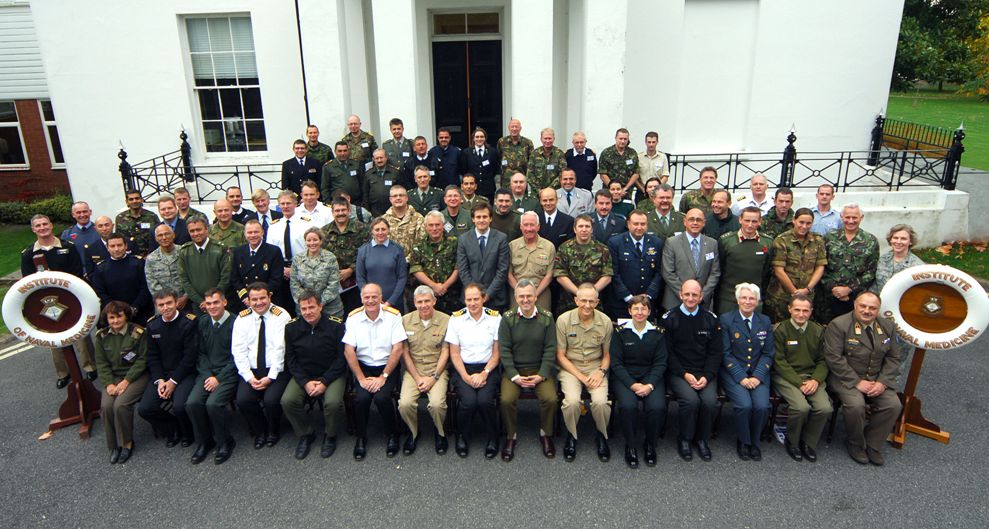
October 19-21, the 4th Operational Medical Conference organized by the Allied Command Operation (ACO) was held at the Royal Naval College at Portsmouth (UK).
Military medical delegations from over 20 countries from across the globe took part in the conference. The main purpose of the conference was to continually enhance and improve ensurement of medical support for troops deployed on NATO operations, as well as to discuss in detail input and cooperation of medical personnel in such operations. The main and core focus of the conference was placed on Afghanistan: development and improvement of ensurement of healthcare and medical support for ISAF forces.
In the conference Brig Gen R. Cordell, Medical Advisor to the Allied Command Operation, Adm B. A. Doll, Medical Advisor to the Allied Command Transformation, (ACT), Brig Gen H. Jeager, ISAF Medical Advisor, and medical advisors of other strategic commands presented military operations carried out in Afghanistan at the moment, the main features of medical support rendered in the operations, and lessons learned.
Influence of lessons learned on the NATO's medical community's future conduct as well as on the process of military medical training, especially during the period of pre-mission training, was analysed. Differences between civilian and military medical requirements: main problems in patients' health military vs. civilian medical personnel has to face, differences in work conditions (work in civilian hospital in peaceful environment contrary to work in military operation zone - quarters constructed from tents and containers). The meeting also evaluated the demand of reviewing and correcting doctrine documents.
One day of the conference was dedicated to medical support of naval operations and lessons learned meanwhile, analysis of commitment and application of surgical capabilities in warships in order to ensure timely medical assistance, and characteristics of training medical personnel for naval operations.
As the majority of military operations in Afghanistan receive medical support from multinational medical support units, the final day of the conference was devoted to reports and discussion on strengthening medical command in strategic and operational NATO headquarters. Aspects of individual and collective training of medical personnel and challenges faced, such as medical licenses, treatment algorithms, scope of services provided, competence and interoperability of medics in forming multinational medical units.
Work groups developed active discussions during the conference. Each work group presented suggestions on a range of relevant medical themes. Their suggestions will be tabled to and analysed at the COMEDS meeting in December.
An idea prevailed in the conference that medical equipment is crucial part of military operations and that military personnel conducting operations feel more comfortable and secure knowing that they will receive timely and qualified medical help in case of necessity. Therefore medical personnel of every country deployed on the operation is expected to be well-prepared, qualified, motivated, and every country must take responsibility when forming and deploying to the operation location separate medical capabilities as well as a medical support unit.
Lithuanian military medics have been taking part in multinational operations since 1995. At the moment 6 military medics serve in the faculty of Medical Unit of the Lithuanian-led Chaghcharan PRT. 150 military medics have been sent to multinational missions before the end of the first half of 2010.
Deputy Chief of the Medical Support Units Group of Dr. Jonas Basanavičius Military Medical Service Capt Inga Jancevičienė


