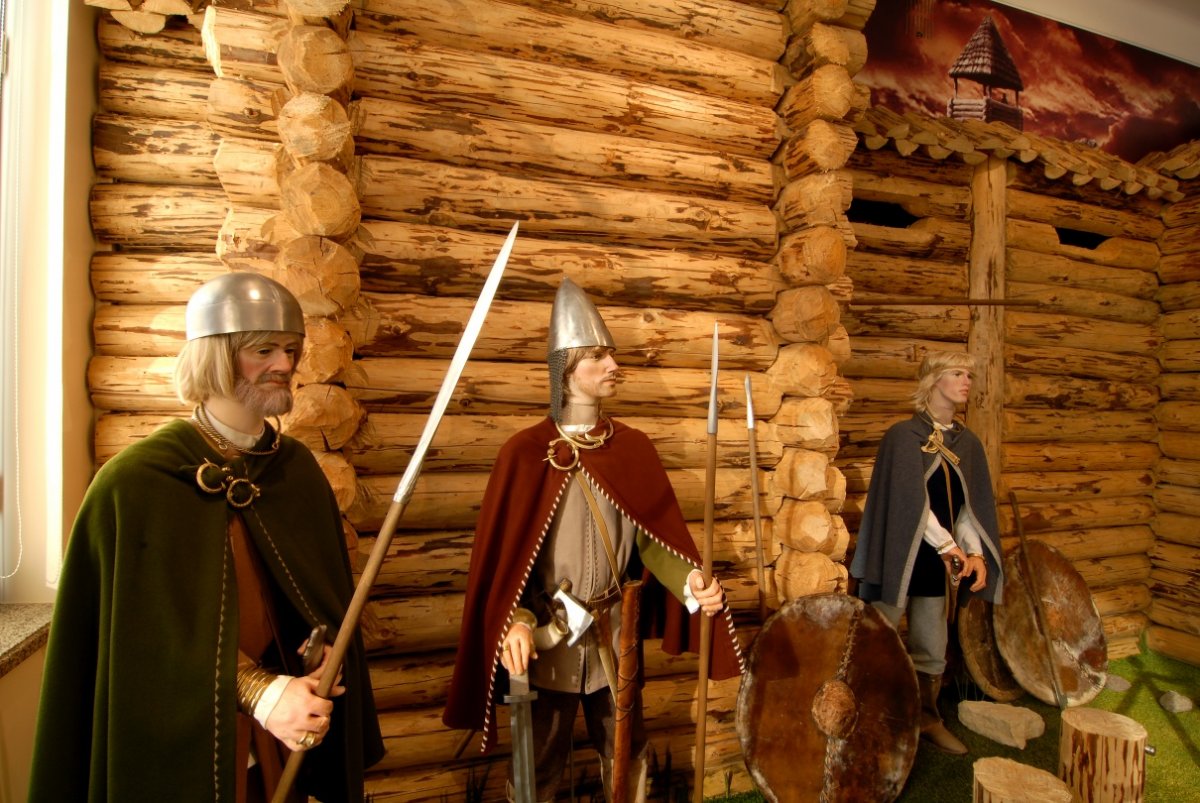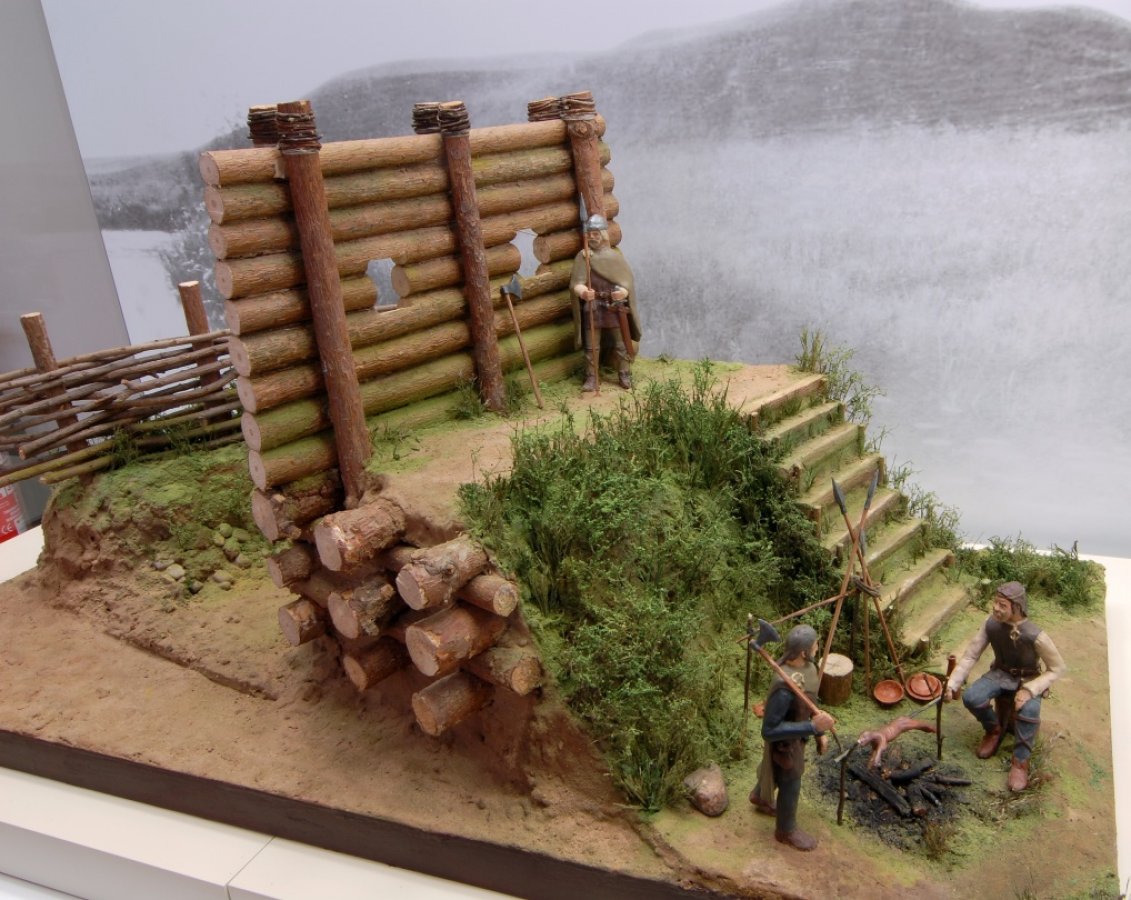
The exposition introducers to the viewer the evidence of the course of prehistoric martial evolution in Lithuania - since the oldest times when the present Lithuania's territory was inhabited by the first settlers till the formation of state stage (the 11th millennium BC - the first half of the 13th millennium). The martial history is divided into three stages: the Stone Age (11 000 - 2000 BC), the early Metal Age (2000 BC - 0 BC) and the Iron Age (Ist- first half of the 13th century). Tools-weapons made of flint, bone or horn that were used in the Stone Age, and proper weapons that appeared in the end of the Stone Age and the beginning of the Bronze Age, such as stone war axes, maces, flint arrow heads of various shapes, spearheads, are displayed. A model of Žemaitiškės 1 A settlement with defensive walls dated 2600-2100 BC tells about armed conflicts between local population and vagabonds of other cultures. Bronze axes, spearheads of various types and a drawing of a reconstruction of Narkūnų mound with buildings and entrenchment as one of the first objects with defensive orientation are presented in the exposition for the early metal period. Currently the number of known mounds in Lithuania reaches approximately 900. An exposition of spectrum of weapons illustrate martial arts in the Iron Age: lances, combat knives, sabers, shield bosses, helmets, equipment for rider and horse. That exposition is supplemented by a model of a13th century defence installation in Rėkučiai. It was a part of northern defence system of the state of Lithuania undergoing the phase of formation. Reconstructions of 10-11th century soldiers' equipment and weaponry are equally important too.
Photos:
No 1: Model of Žemaitiškės 1st A settlement with defensive walls dated 2600-2100 BC
No 2: Reconstructions of clothes, jewelry and weaponry, 10-11th century
No 3: 13th century defence installation in Rėkučiai