On November 23 Lithuania marked the Restoration of the Armed Forces Day. On this day 92 years ago the contemporary Prime Minister of the Republic of Lithuania Augustinas Voldemaras signed the Order No. 1 giving legal basis for formation of the Armed Forces of Lithuania.
This year celebration of the 92nd anniversary of the restoration of the Lithuanian Armed Forces encompasses a number of events across Lithuania including celebratory opening of a memorial for the 16 February 1949 Declaration of Independence of the Council of the Liberation Movement of Lithuania in Mėnaičiai village (Radviliškis Distr.), commemoration of the Lithuanian Armed Forces' victories against the Bermontians in Radviliškis, solemn parade in Vilnius Cathedral Square in Vilnius, etc.
Lithuanian Armed Forces' victories against the Bermontians were marked in Radviliškis on November 21. Commemorative events included re-enactment of episodes from the victorious battles against the Bermontians of 1919 by the Old Mill with residents and guests of Radviliškis as participants, and a parade of participants of the re-enactment in the streets of Radviliškis.
On the eve of the Restoration of the Armed Forces Day, November 22, in remembrance of partisan fights a memorial for the 16 February 1949 Declaration of Independence of the Council of the Liberation Movement of Lithuania was opened in Mėnaičiai village (Radviliškis Distr.). President of the Republic of Lithuania, leadership of the National Defence System, representatives of the Lithuanian Liberation Movement, Genocide and Resistance Research Centre of Lithuania, and other guests attended the event. The memorial complex embraces bunker of chief partisan command, barn built over it and monument for the partisans of Lithuania next to the bunker. Names of all the eight partisan signatories of the Declaration of Independence - Vytautas, Vanagas, Užpalis, Merainis, Kardas, Faustas, Žadgaila and Naktis - are recorded on the monument designed by sculptor Jonas Jagėla. None of the eight signatories of the Declaration of Independence of 16 February 1949 betrayed people who hid and supported them or their ideals. The final resting place of their bodies is not known therefore this site of historical meaning to Lithuania is expected to become a sign of remembrance of the partisan signatories of the symbol of the 16 February 1949 Declaration of Independence but also a symbol of perpetual respect to the aspiration of freedom of all the partisans of Lithuania.
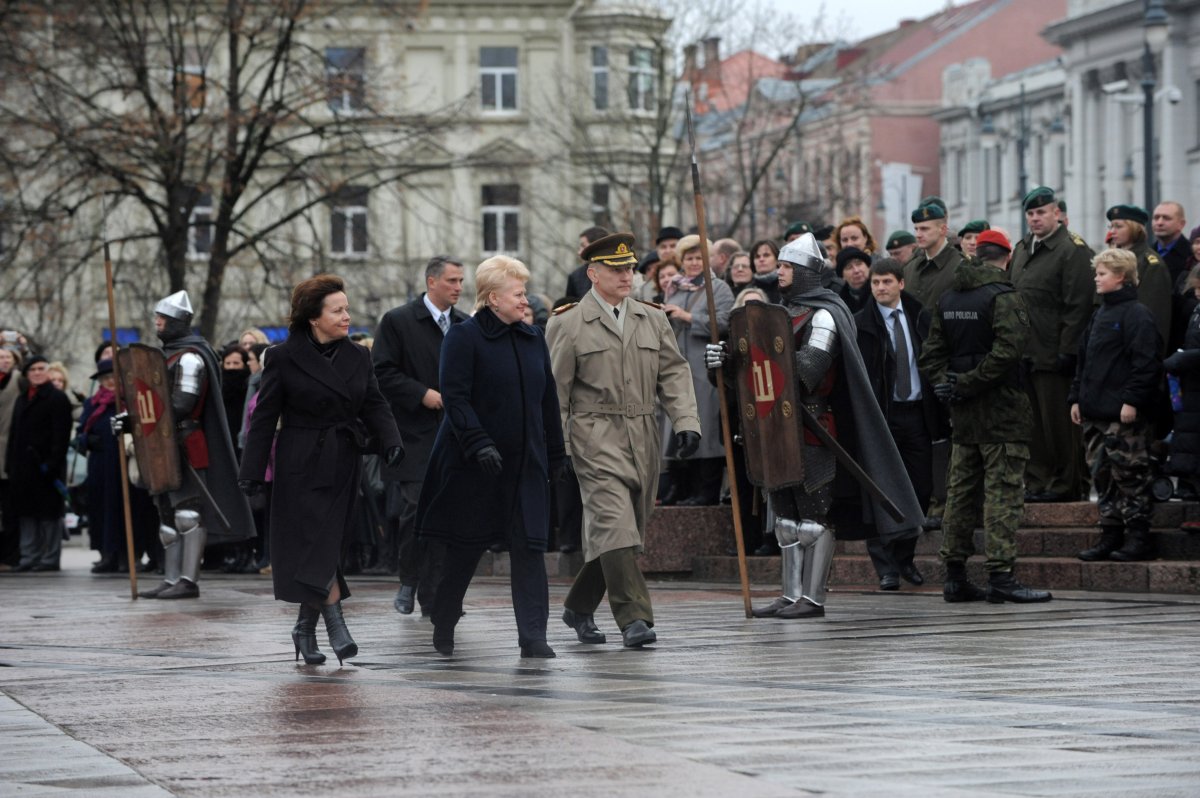
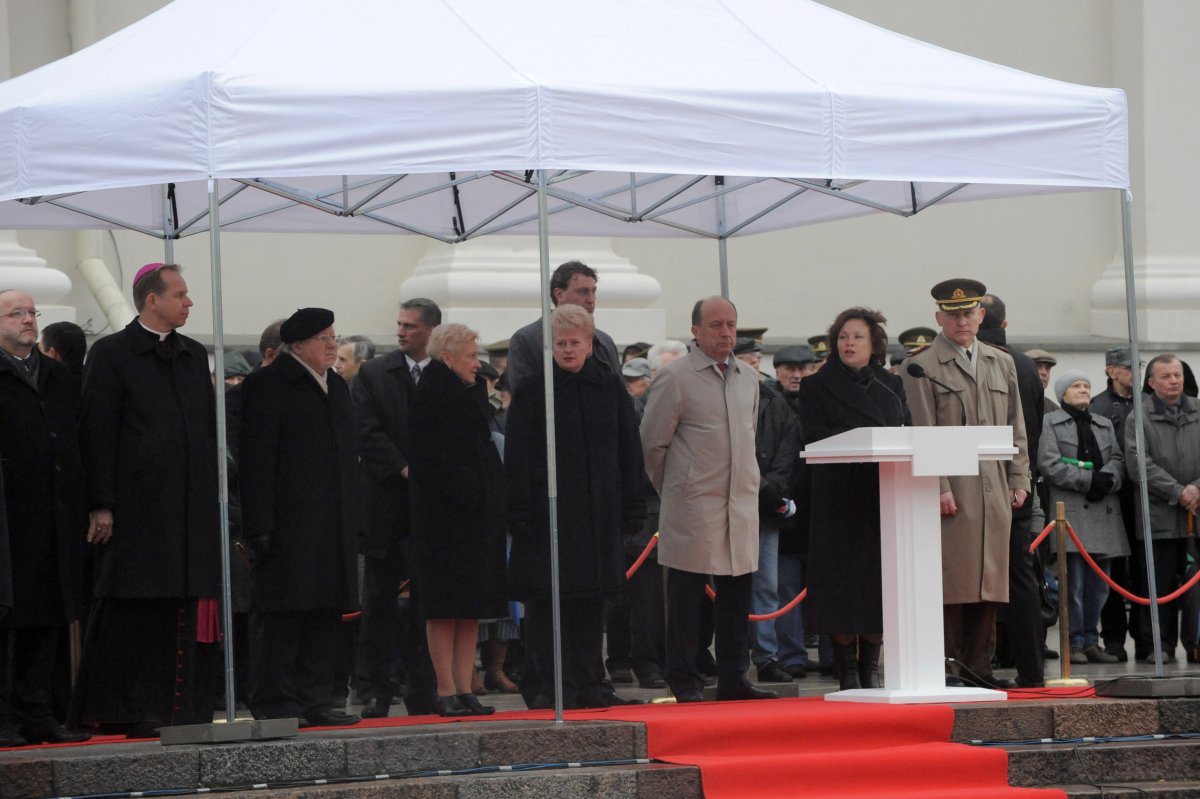
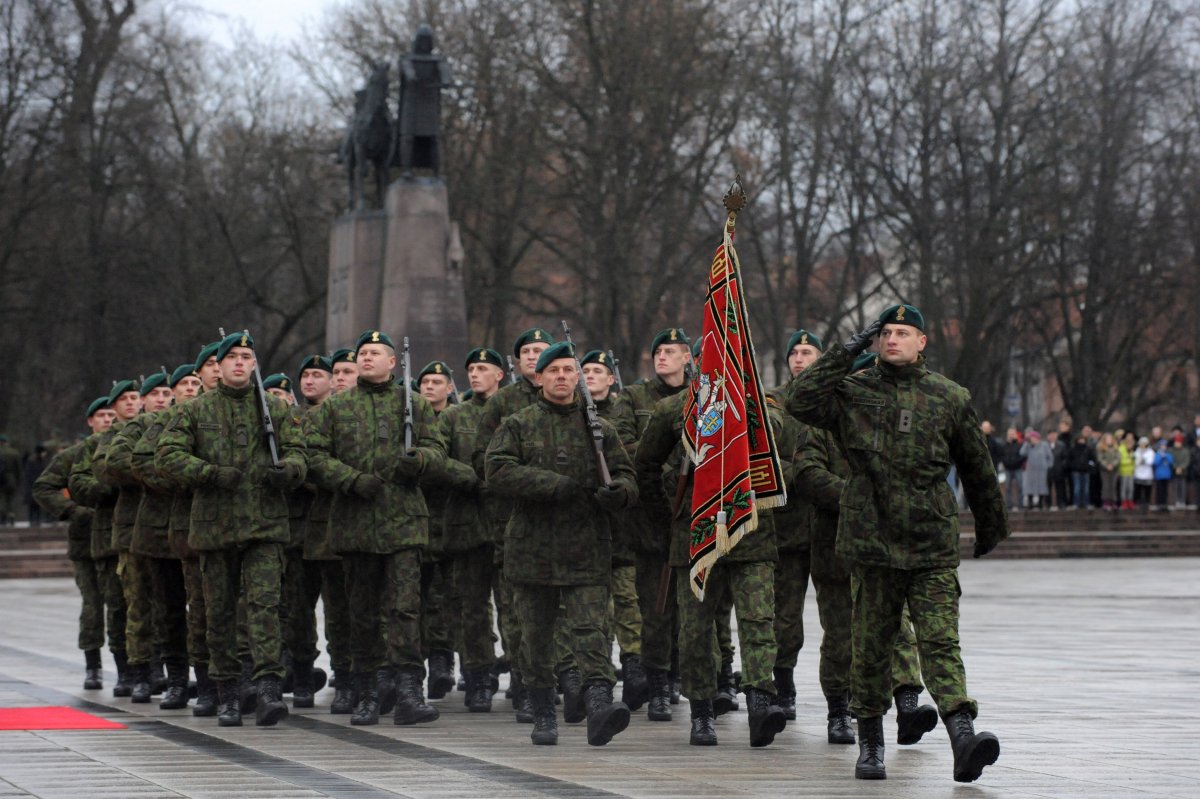
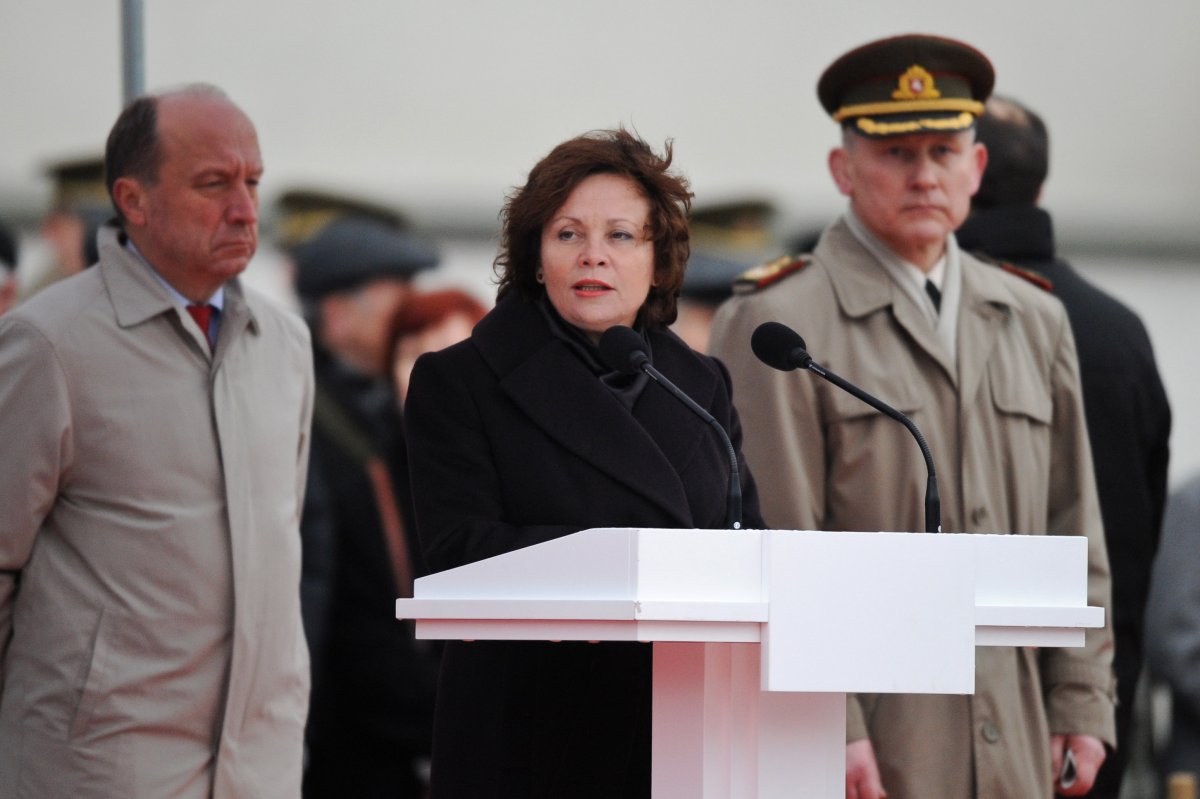
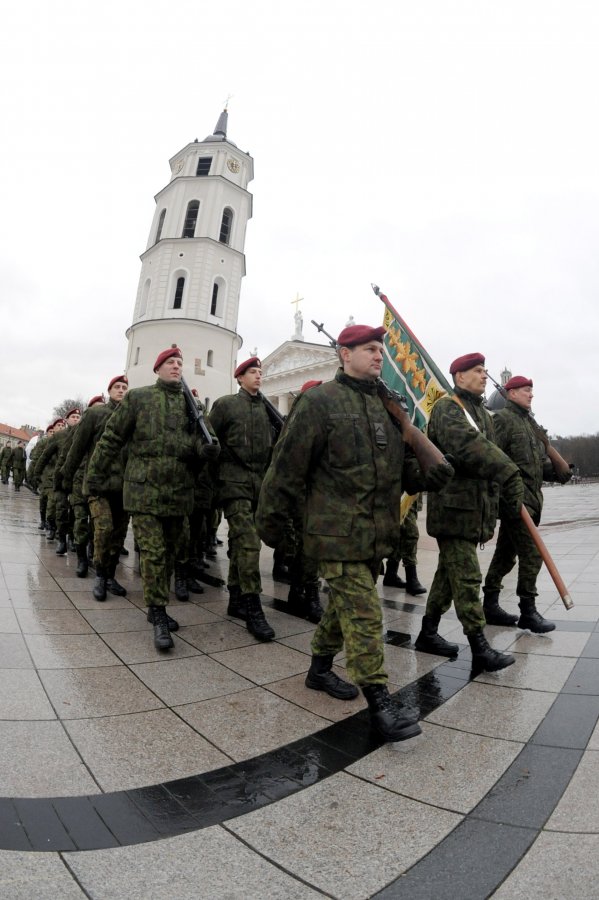
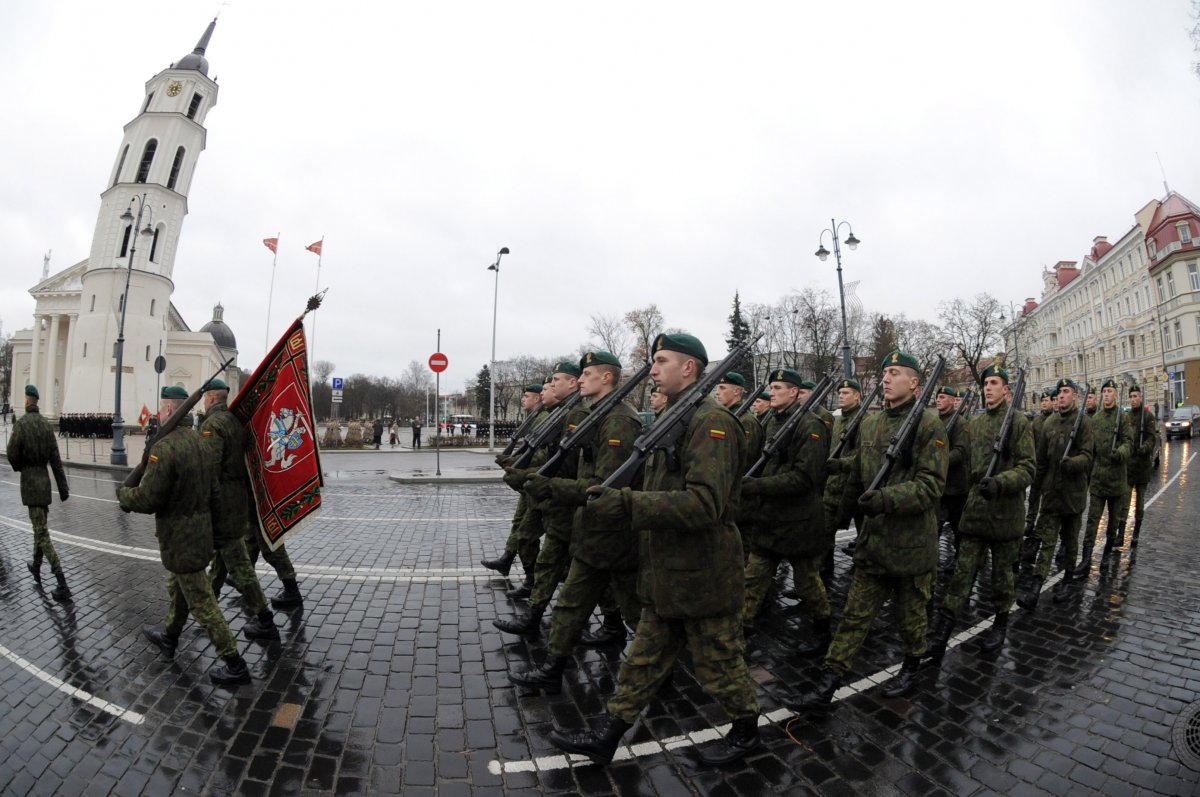
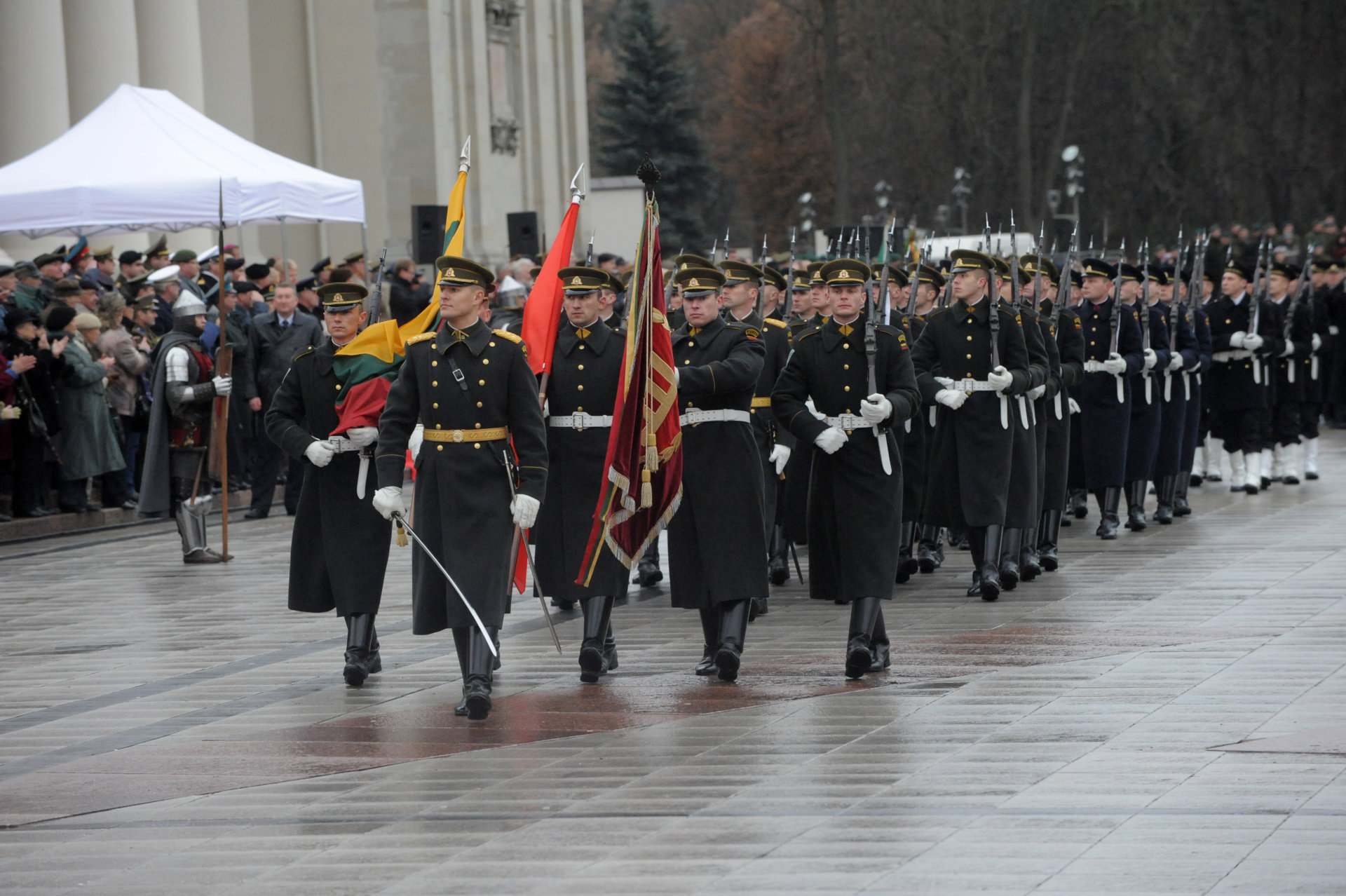
On November 23 more than 400 troops across all the branches of the Lithuanian Armed Forces stood out in a solemn formation in Vilnius Cathedral Square. President of the Republic of Lithuania and Commander-in-Chief of the Lithuanian Armed Forces Dalia Grybauskaitė, Minister of National Defence Rasa Juknevičienė, and Chief of Defence of Lithuania Maj Gen Arvydas Pocius delivered addresses of congratulation to the Lithuanian servicemen on their day.
"Guided by the most honorable traditions, you are strong today standing in the guard of your Homeland. Our weaponry and readiness agrees with international standards, Lithuanian troops deserves the best evaluations from partners serving together in the most responsible multinational operations", addressed President D. Grybauskaitė representatives of the Lithuanian Armed Forces.
"Today is the only day in a year we have to pause and bow our heads against our soldiers. Against people who give their entire selves without counting hours of service or their strength. They are taking our armed forces ahead, they train to deliver national defence and it is thanks to them that Lithuania has a name of a reliable and professional friend," addressed troops Minister of National Defence. „As your Minister of National Defence I admire the Lithuanian Armed Forces. Difficulties and recession times did not prevent it to stand in line with NATO old-timers' armed forces raised from the ashes as it was within 20 years after the restoration of independence. Professionalism and dedication of our military receives high appreciation - be it NATO operation in Afghanistan or duty in NRF, or joint exercise - an area to be expanded according to the recent plans."
Three volleys were shot for Freedom and Independence, Homeland Lithuania, and Lithuanian Armed Forces. Troops observed a minute of silence for all the fallen for the Homeland. Flowers were laid at the Antakalnis Memorial for Freedom Fighters, the Monument for the Fallen for Freedom and Independence of Lithuania, and at the Tomb of the Unknown Soldier in Rasos Cemetery. After the solemn formation troops marched down the Gediminas Avenue to the Seimas Palace.
Restoration of the Armed Forces Day is soldiers' holiday above all, to be marked across the entire Lithuanian Armed Forces. „Lithuanian Warrior's Statuette" - traditional award for noble and dedicated service in the National Defence System for military and civilians - was presented in Vilnius Garrison Officers Club to the tunes of the Big Band of the Lithuanian Armed Forces, and choir of the Lithuanian Military Academy „Kariūnas". The award is rendered to express gratitude for anyone glorifying soldier's profession by the example of his life and dedication, the one who adds special meaning to the vocation of a Motherland's defender, and recognizes determination, will, honour, loyalty, duty, respect, integrity, courage and dedication as criteria of his action in case of necessity.
The first military parade in the independent Lithuania was organised in the Town Hall Square in Kaunas on 16 February 1919. The following events also held in Kaunas involved representatives of all the units of the Lithuanian Armed Forces - infantry, cavalry, air division, artillery, Alytus lancers, cadets of the Military School, naval platoon from Klaipėda - with their equipment and weapons. Parades also presented to the public combat equipment - armored vehicles, artillery cannons, air defence systems, motorbikes of intelligence officers.
History of military dates back to ancient times - already in the Roman Empire soldiers would go to battle in regular formations. Battle formations were an effective way of fight for a very long time. In modern times formations and parades serve as military ceremonies of tributing brothers in arms commanders, and citizens of their home countries. In Lithuania from postwar to present parades are inspected by the Commander-in-Chief, the President of the Republic of Lithuania.