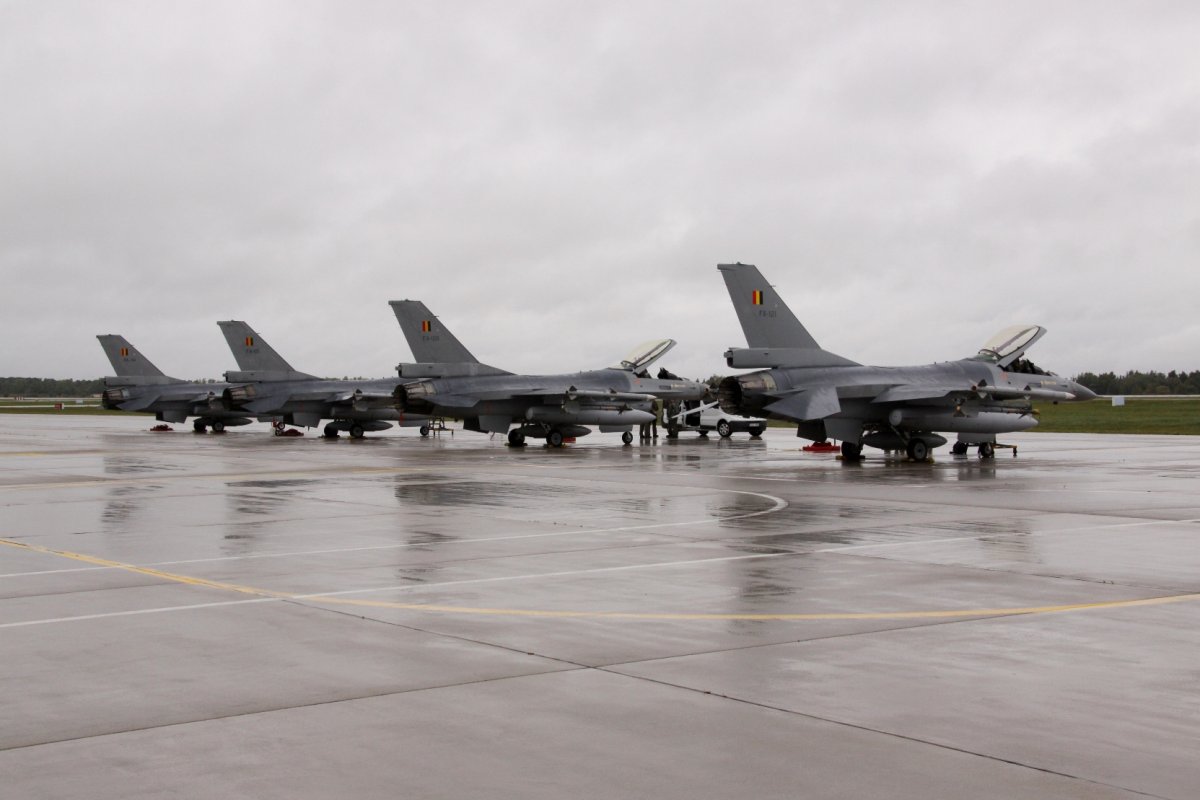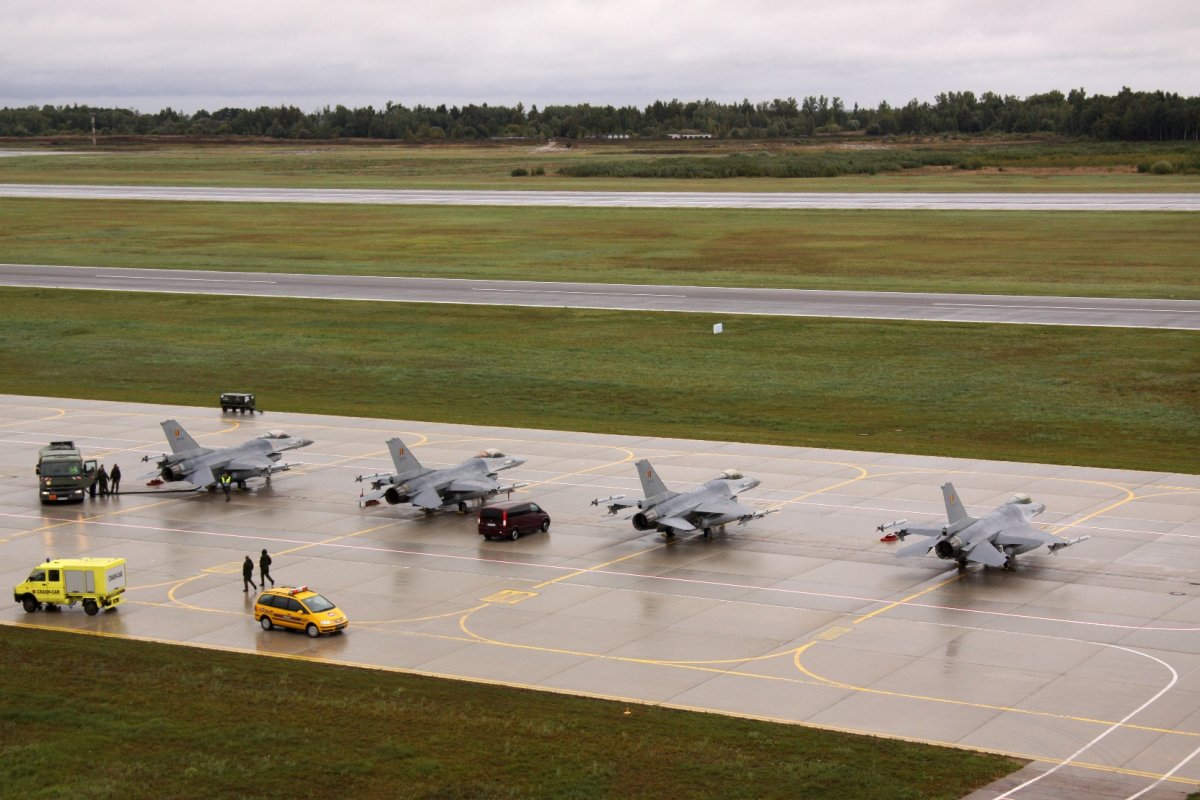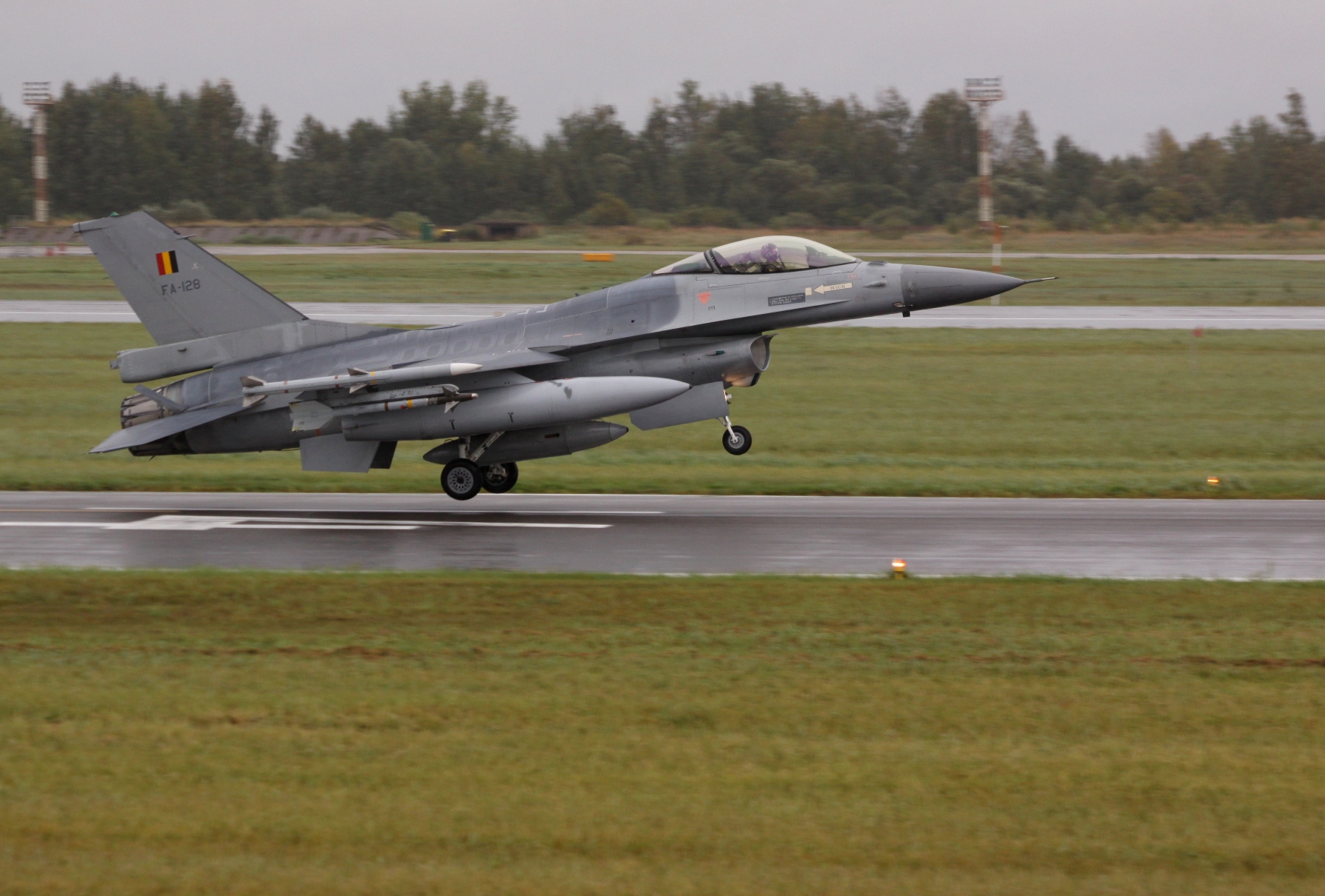
The three Baltic States train to render Host Nation Support at Exercise Baltic Host 2013 held from October 30 to November 8. It is understood as civilian and military support rendered to assisting nations by a host nation. We can take NATO's Baltic Air Policing mission if we need to refer to a really successful example.
"I am happy to assert that NATO's Air Policing mission in the Baltic States is a great example of successfully rendered Host Nation Support. Certainly, it is always possible to perform better, with a better financing, in particular. However, we are able to ensure vital needs without major difficulty, MAJ Saulius Ivanauskas, head of Host Nation Support and Mobilisation Recourse Planning Division, said. MAJ S.Ivanauskas named Baltic Joint Control and Reporting Centre established in the Airspace Surveillance and Control Command, Karmėlava, which is in charge of NATO's air defence operations in the Baltic region as another instance of HNS that Lithuania rendered.
The major load of ensuring HNS falls on Lithuania: it provides airport infrastructure, maintenance and fire-fighting services, transportation services to and from the area of operations with C-27J Spartan of the Lithuanian Ari Force, support to SAREX operations, and ensures other functions vital for the successful implementation of a mission.
The other two Baltic States contribute financially: Lithuania, Latvia and Estonia share the financial burden of rendering HNS near-equally. In 2011 the total spending of the three Baltic States for that purpose amounted to approx. EUR 2.2.
The countries have also agreed to increase HNS-oriented financing to the target EUR 3.5 per year, shared in three equal parts, by 2015.
The aim of the Baltic air policing is to ensure security of NATO airspace by conducting air patrolling and responding to possible airspace violations. Air policing function is ensured above all the NATO's land territory. In the Baltics short of adequate national air capabilities (i.e., fighter-jets) the mission is carried out from Alliance's common resources to attest the principle of solidarity.
NATO member states began sending their air capabilities to protect the Baltic airspace when Lithuania, Latvia and Estonia entered NATO in March 2004. Belgium, Denmark, the Czech Republic, UK, Spain, U.S.A., Poland, Norway, the Netherlands, Portugal, France, Romania, Turkey and Germany have sent their air assets and personnel to protect the Baltic skies and have made use of the Host Nation Support since then.