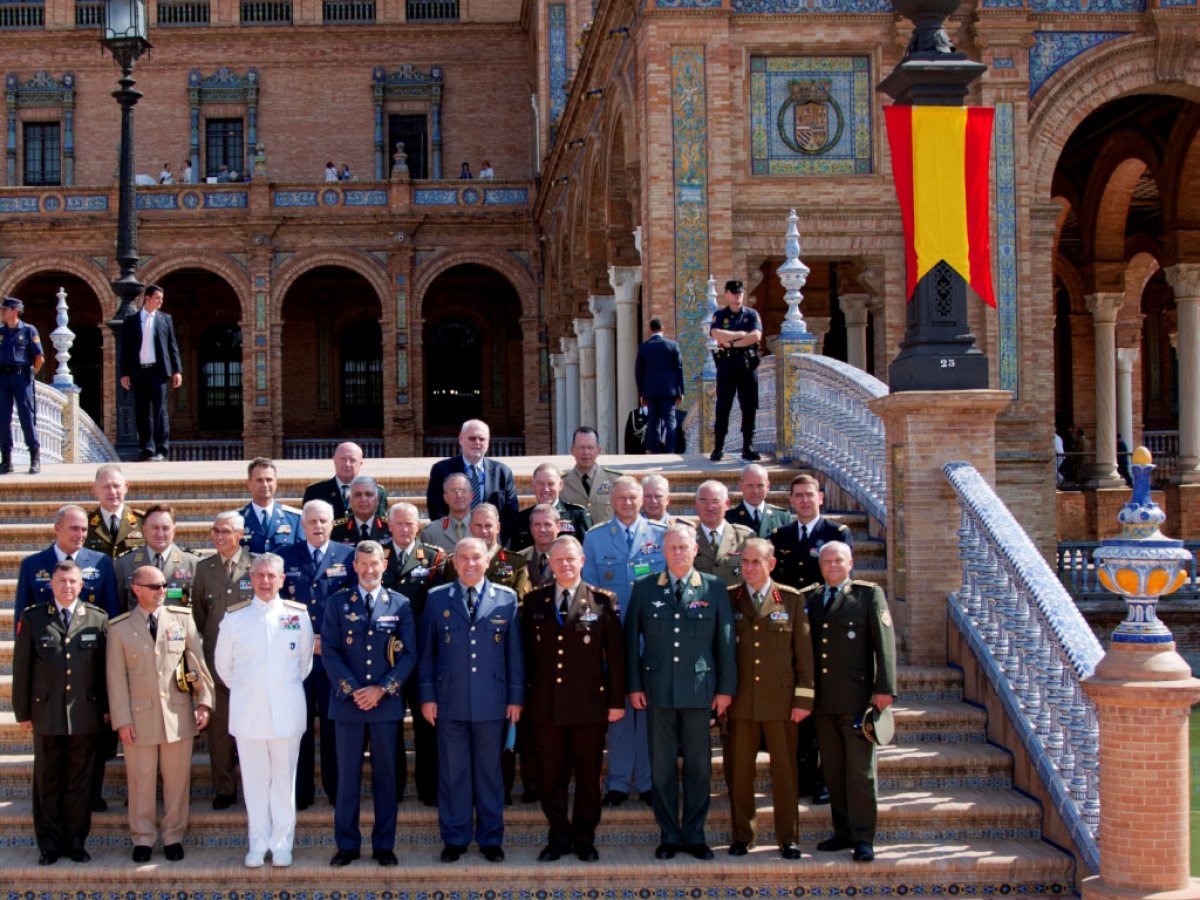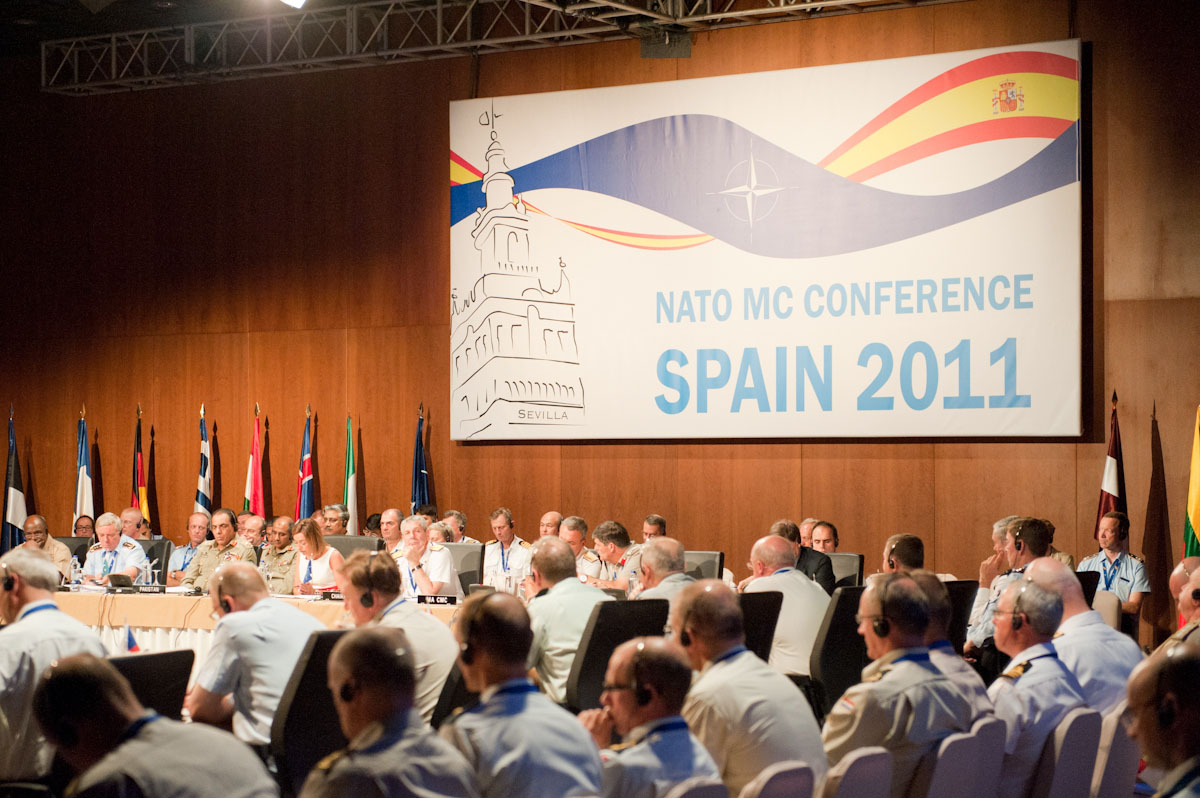
September 16-18, Chief of Defence of Lithuania Lieutenant General Arvydas Pocius attended NATO's Military Committee Conference in Seville, Spain which focused on NATO's mission in Afghanistan.
At the meeting Chiefs of Defence of 28 NATO states discussed situation in Afghanistan, the issue of transfer of responsibility to the Afghanistan security forces, also spoke about the ongoing transformation of the Alliance,the operational issues and challenges, lessons learned, and NATO role in the context of the so-called " Arab Spring".
The conference was attended by NATO Supreme Allied Commander Europe (SACEUR), Admiral James G. Stavridis and NATO Supreme Allied Commander Transformation (SACT) General Stephane Abrial.
In the conference the Chief of Defence of Lithuania Lt Gen A. Pocius stressed the importance of bilateral and regional cooperation, met with Chiefs of Defence of Latvia and Estonia, as well as Denmark, Poland, Germany and other countries, they discussed perspectives of joint exercises, participation in operations, strategic co-operation.
The transfer of responsibility to the Afghanistan security forces and NATO's long-term activity perspectives in the country after the transfer phase were reviewed in the conference. NATO countries and partners plan to continue maintaining support for the Afghanistan until it completely takes over responsibility for its security and in the process of transfer restores security institutions. The support will also be provided after 2014, the planned time to end the process of transfer. Considering the importance of the region, and seeking to achieve the enduring stability in Afghanistan, the Alliance is developing cooperation with Pakistan, the leading country in the region. Chief of Defence of Pakistan General Kayani to the Chiefs of Defence of NATO states introduced the approach of Pakistan to strategic and operational partnership between NATO-led International Security Assistance Force, Afghanistan National Security Forces and Pakistani military situation. These renewed efforts to strengthen co-operation are particularly important for regional stability.
Chiefs of Defence of NATO states also discussed potential strategic implications in the Alliance's security map in the context of recent events in the Arab world, called "The Arab Spring"., especially in light of the specifics of the crisis management operations. The participants of the conference also discussed the possibilities of partnership with countries in the region using the examples of partnerships such as Mediterranean Dialogue and Istanbul Cooperation Initiative.
Supreme Allied Commander Transformation, General S. Abrial presented the latest challenges for the Alliance's transformation and operations, "intelligent defence" concept, which aims to identify ways to develop capability efficiency. NATO Supreme Allied Commander Europe, Admiral James G.Stavridis presented analysis of NATO operations in Kosovo, Libya, and operations against pirates in the Indian Ocean. During the meeting Chiefs of Defence discussed NATO operations experience; special consideration was paid to the operation "Single Defender "in Libya. Chiefs of Defence discussed how lessons learned could be used in future operations, and provided suggestions on how the experience might be considered while implementing new NATO command structure.
This is the first meeting of NATO's Military Command held from the beginning of the process of responsibility transfer to Afghanistan security forces and the last before the NATO states defence ministers' meeting in October, held in Brussels. The conference findings will be valuable for NATO defence ministers meeting in Brussels.
New Chairman of NATO's Military Committee, Chief of Defence of Denmark General Knud Bartels was elected in the conference, his term of duty is expected to begin in summer, 2012. In this position he will replace the Italian Chief of Defence Admiral Giampaolo Di Paola.
NATO's Military Committee is NATO's highest military command structure, subordinate to the North Atlantic Council, Defence Planning and Nuclear Planning Committees.